68 lessons · $32 · 14-day money-back guarantee
The Gun Mechanism Notebook — Volume One cover
Digital books from the Gus Explains Guns channel

The Gun Mechanism Notebook

68 lessons from an Erie machinist's basement bench
“If you can't explain why it cycles, you don't understand it yet.”— Walt Pelkowski, his old shop foreman, 1979

Sixty-eight lessons on how a gun's action actually cycles — bolt, lever, pump, blowback, gas, revolver timing, magazines, sights, muzzle devices, and the famous myths checked one by one against the mechanism instead of the forum argument. Every lesson carries a drawing, the steps in order, the mistakes people actually make, and where the method stops applying. Jam on your own bench? The 210-entry symptom index in the back points you to the right lesson directly. Doesn't need a workshop.

38 YEARS ON AN ERIE SHOP FLOORA CUTAWAY DRAWING FOR EVERY LESSONMYTHS BUSTED WITH A STEEL RULER
  • 14-day money-back guarantee. Write to us and you get your money back.
  • Bonus: The Gun Bench Cheat Sheet — one page to print, every number that matters
  • Pay once · yours to keep · no subscription
  • Secure checkout by Gumroad · the PDF is yours the moment you've paid, with a copy by email

By buying you agree to the Terms of Sale and Refund Policy.

0 checkouts started in the last 24 hours

PDF · 179 pages · 68 illustrated lessons · read on phone, tablet or computer, or print it
68Numbered lessons
6Parts
38 yearson an Erie shop floor
210Problems in the index
14 daysMoney-back guarantee
Not a parts catalog

For the moment you want to know why, not just what

This is for the second after you watch a bolt cycle, or a round fail to feed, and want the actual mechanical reason instead of a guess. It isn't a buyer's guide or a spec sheet — it's sixty-eight explanations of motion, timing, and pressure, walked through the way Walt made Gus measure a cut before he trusted it.

What you needThe part or cartridge in hand, nothing else required.
How it goesThe exact sequence, step by step, in the order it happens.
Why it worksThe mechanical reason each step does what it does.
How people ruin itThe common mistakes, named, each with the sign and the fix.
Where it doesn't holdThe exceptions — what this doesn't cover, stated plainly.
What makes it different

Built for the day it goes wrong

Look up the failure first

210 symptoms indexed in the back — jam, failure to feed, light strike — each one pointing straight to the lesson that explains the mechanism behind it.

Honest verdicts on the famous guns

The AK's loose-fit myth, the Glock safety myth, the AR's dirty-gun myth — checked against how the mechanism actually behaves, not the forum argument.

Mistakes named, not implied

199 mistakes named across the book, each paired with the sign it's happening and the fix — not a general warning to 'be careful.'

A reference you can check

155 numbers in the back — calibers, pressures, click values — pulled from published specs, so you're not relying on memory or a forum post.

What you'll be able to do

After the book

  • Watch a bolt, lever, or gas action cycle and name what each stroke is doing
  • Tell an old-pattern revolver from a transfer-bar gun before loading it full
  • Read a headstamp and know what it's actually telling you
  • Spot why a magazine is jamming instead of blaming the gun
  • Check a scope's actual click value instead of trusting the stamped number
VOLUME ONE · SIX SECTIONS

From the cartridge up to the comment-section myths

Starts with the four parts of a cartridge and ends with honest verdicts on the AK, the AR, the 1911, and the rest — everything between is how the actions, magazines, sights, and muzzle devices actually work.

Part OneAmmo And Cartridge BasicsCartridge anatomy, headstamps, calibers, bullet types, and the pressure signs that tell you something's wrong.
Part TwoHow Actions Really CycleBolt, lever, pump, blowback, gas, recoil, and revolver actions traced step by step through their full cycle.
Part ThreeMagazines And Feeding ExplainedBox, rotary, tube, and drum magazines, feed lips, followers, and the real reasons feeding fails.
Part FourSights And Reticles DecodedIron sights, peep sights, zeroing, MOA and MRAD, parallax, BDCs, red dots, and eye relief.
Part FiveMuzzle Devices And Strange MechanismsBrakes, compensators, flash hiders, suppressors, gas checks, bullpups, and the oddball actions worth knowing.
Part SixFamous Guns And Myths, Honest VerdictsThe AK, AR, 1911, Glock, Mosin, M14, Luger, and the shotgun and barrel-length myths people keep repeating.
From inside the book

Every lesson has a drawing

68 drawings, one per lesson, show the part doing the thing being explained — not a stock photo of the gun sitting still.

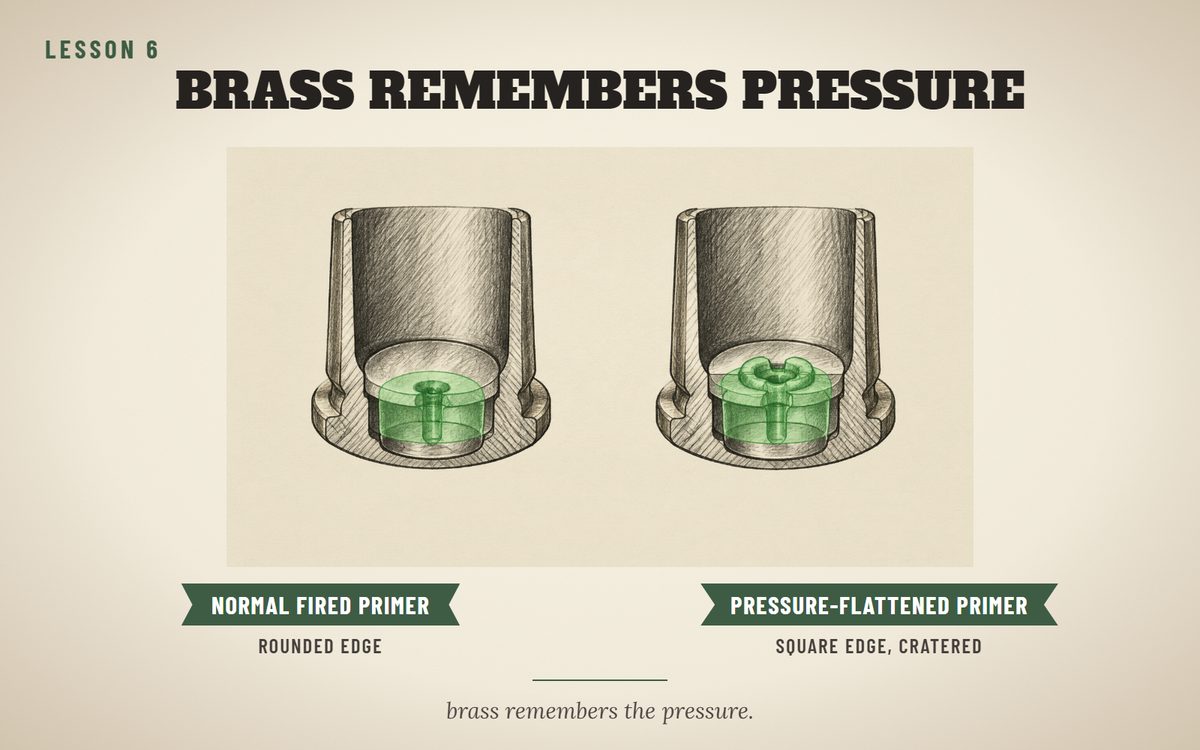
Lesson 6 drawing
Lesson 6 · page 19 · Pressure Signs On Brass
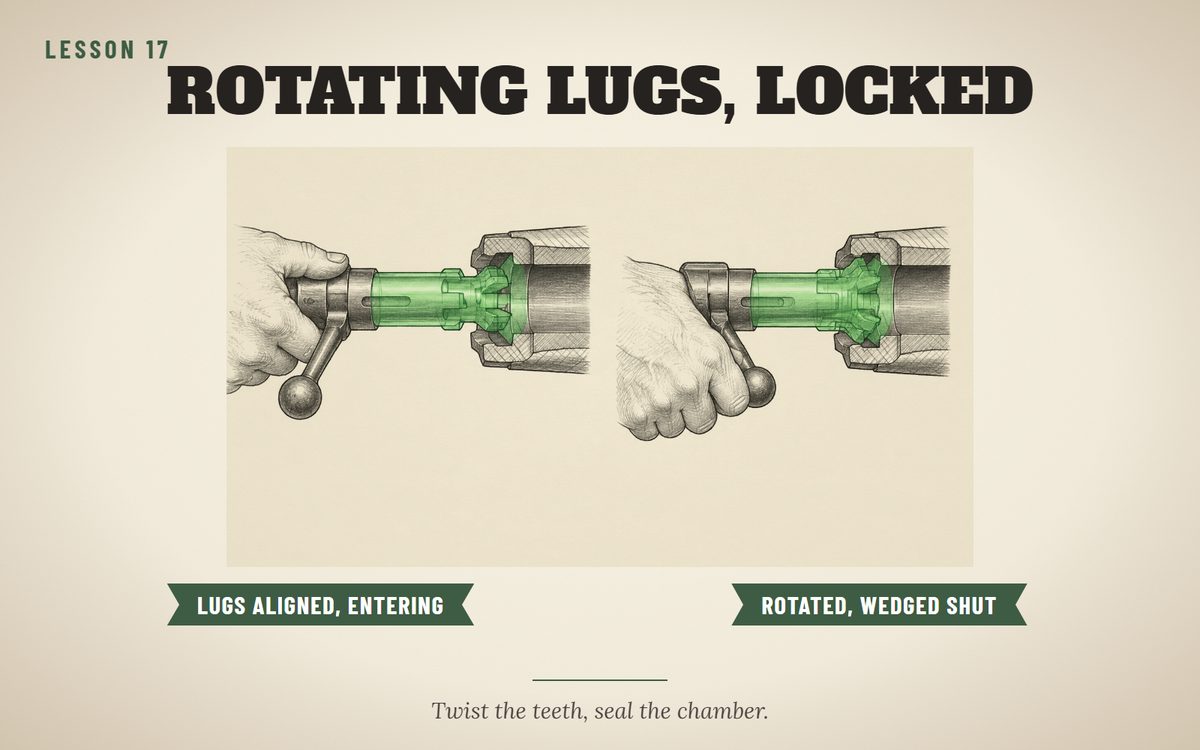
Lesson 17 drawing
Lesson 17 · page 43 · The Rotating Bolt Lockup
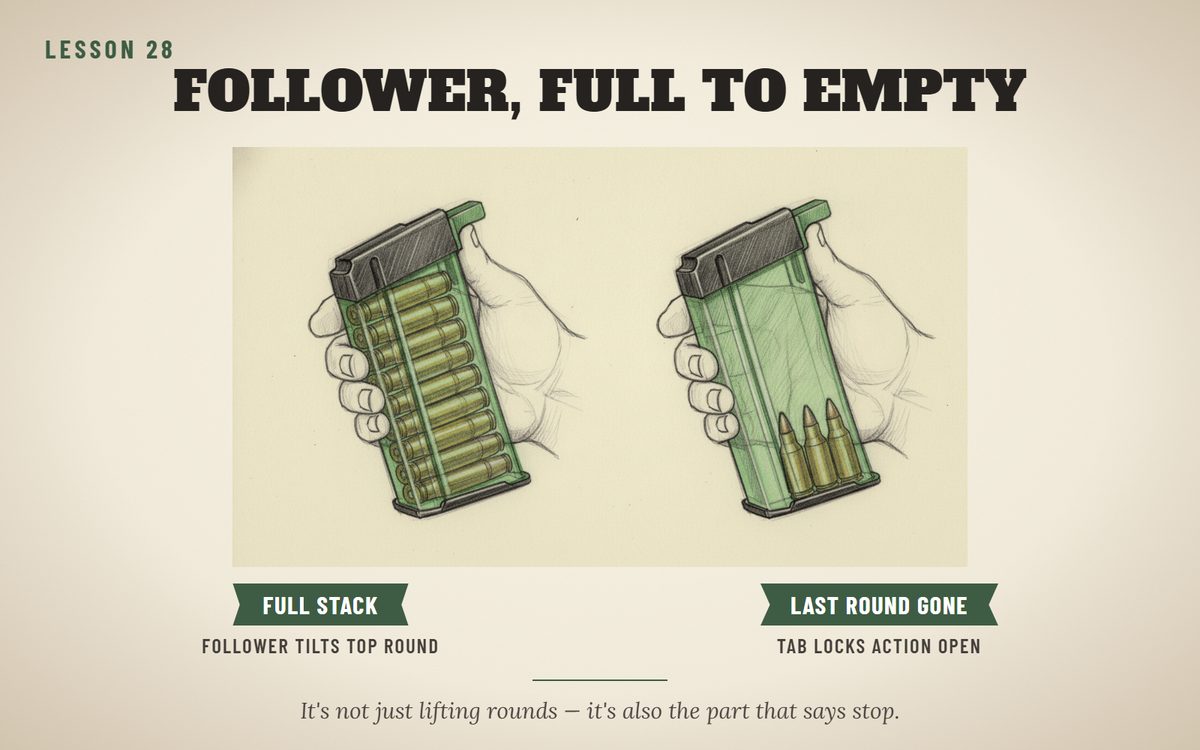
Lesson 28 drawing
Lesson 28 · page 68 · The Follower's Real Job
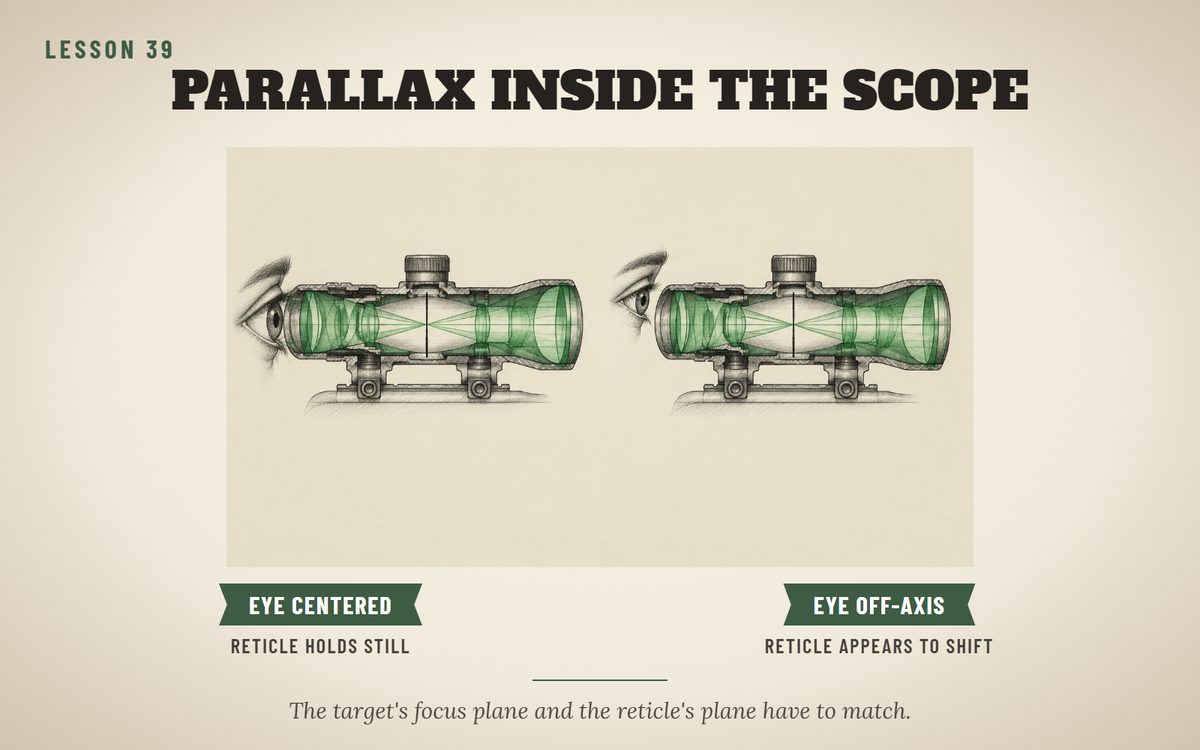
Lesson 39 drawing
Lesson 39 · page 93 · Why Parallax Matters
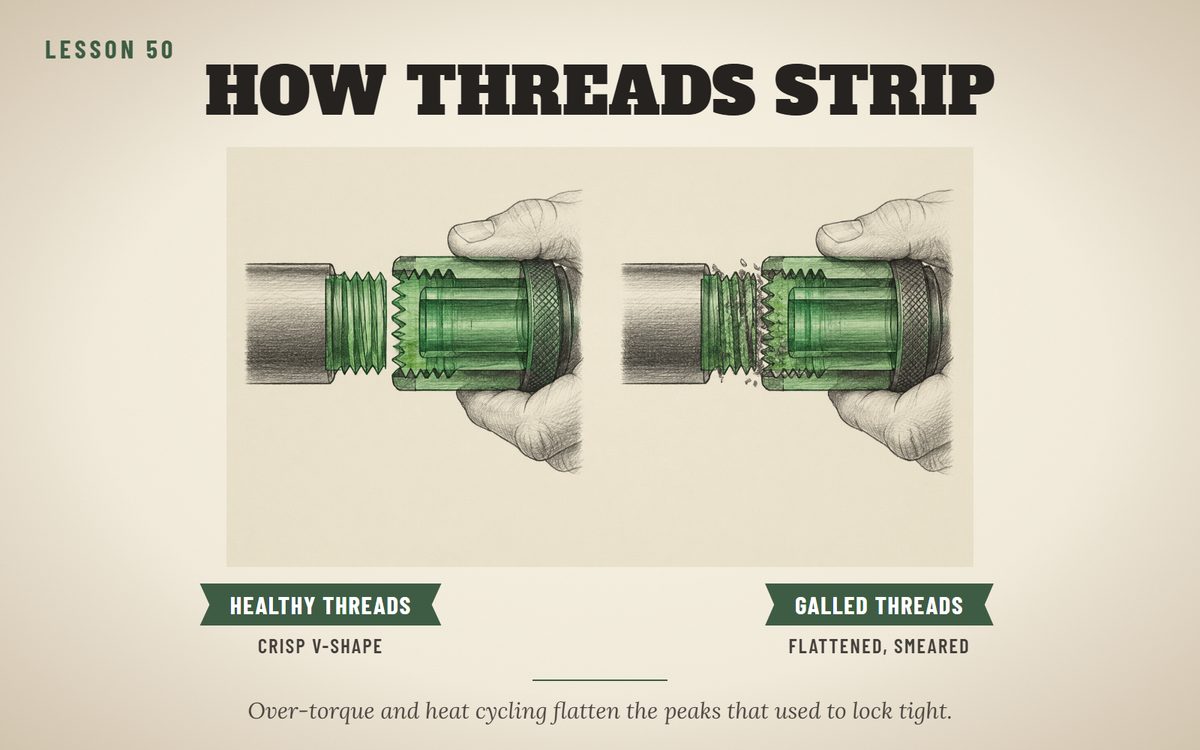
Lesson 50 drawing
Lesson 50 · page 122 · Why Threads Strip Over Time
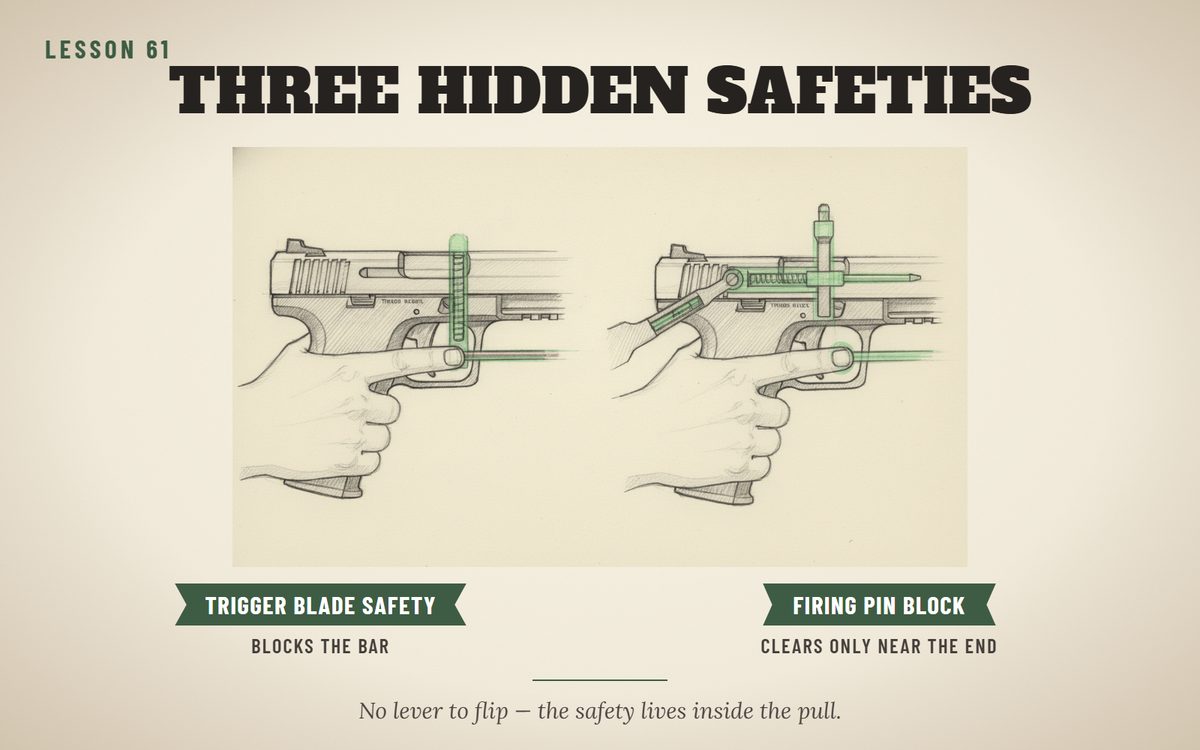
Lesson 61 drawing
Lesson 61 · page 147 · The Glock Safety Myth
A page from the bookA page from the bookA page from the book
WHY THIS GOT WRITTEN DOWN
"If you can't draw it, you don't know it yet either."

My nephew sent me a video of his AK's bolt not locking and asked why, and I realized I could draw him the answer faster than I could type it.

So I grabbed the back of an invoice pad, sketched the bolt carrier and the lugs and the whole cycle, and texted him a photo.

That's how the channel started: a question, a drawing, a video.

But Walt used to say if you can't explain why it cycles, you don't understand it yet, and I kept explaining the same handful of mechanisms over and over.

So I started writing the drawings down properly — the steps in order, and the mistakes I'd actually seen made, on my own bench and other people's.

Took most of a winter down in the basement, same steel ruler I carried on the shop floor for thirty-eight years.

By spring I had sixty-eight of them.

Walt's rule held on every single one.

— Gus

WHO'S TALKING

Gus Marchetti

Gus Marchetti

Gus Marchetti spent thirty-eight years on a machine shop floor in Erie, Pennsylvania, running lathes and mills, before he retired in 2015.

He apprenticed in 1977 under shop foreman Walt Pelkowski, who made him measure every part twice before trusting a single cut — a habit that runs through every lesson in this book.

Gus Marchetti is an AI-generated character built to teach the way a patient old machinist would. The mechanisms are real, and every safety claim in the book was checked against published sources, even though the voice explaining them isn't a recorded man.

Made with AI — so you know what you're buyingGus Marchetti is an AI-generated character, the host of the Gus Explains Guns YouTube channel. The host, the videos and the book's illustrations are made with AI. The methods are real, and every number that bears on safety was checked against official guidance.

“A gun's either going to lock up right or it isn't — the steel doesn't care what you meant to do.”

All 68

What's inside

    Ammo And Cartridge Basics

  1. 1Case, Primer, Powder, Bullet
  2. 2Rimfire Versus Centerfire
  3. 3Reading A Headstamp
  4. 4What Caliber Really Means
  5. 5Bullet Weight And Drop
  6. 6Pressure Signs On Brass
  7. 7Why Brass Gets Reloaded
  8. 8Steel Case Versus Brass Case
  9. 9How To Store Ammo Safely
  10. 10Why Some Rounds Won't Chamber
  11. 11Hollow Point Versus FMJ

    How Actions Really Cycle

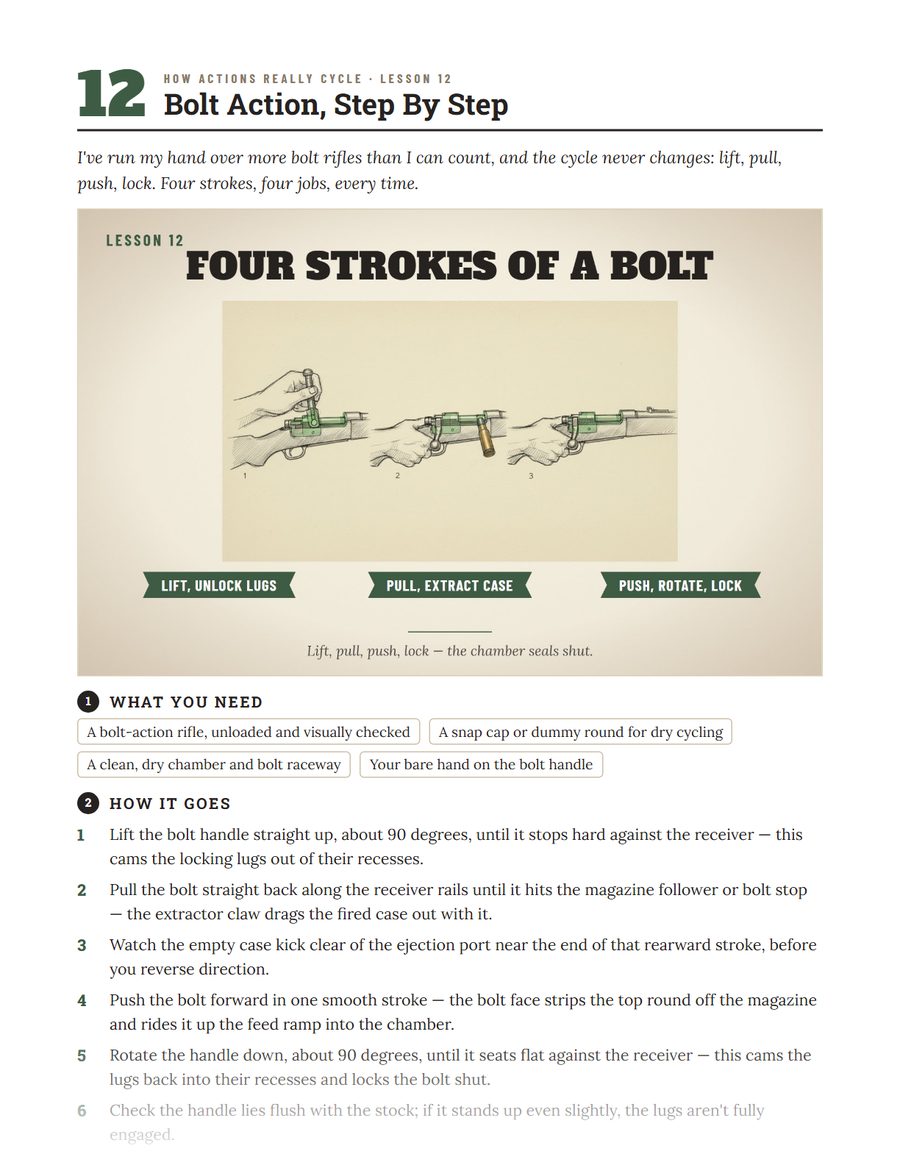
  1. 12Bolt Action, Step By Step
  2. 13The Lever Action Loop
  3. 14Pump Action Timing
  4. 15Blowback Explained Simply
  5. 16Gas Versus Recoil Operation
  6. 17The Rotating Bolt Lockup
  7. 18Tilting Bolt Lockup
  8. 19Why Short-Stroke Gas Works
  9. 20The Direct Impingement Debate
  10. 21Double Action Versus Single Action
  11. 22Revolver Cylinder Timing
  12. 23The Hammer-Forward Myth

    Magazines And Feeding Explained

  1. 24Box Magazine Basics
  2. 25The Feed Lip Angle
  3. 26Rotary Magazine Mechanics
  4. 27Why Double-Stack Jams Happen
  5. 28The Follower's Real Job
  6. 29Tube Magazine Loading Order
  7. 30Why Drum Magazines Fail More
  8. 31The Last-Round Bolt Hold
  9. 32Stripper Clips Versus En Bloc
  10. 33The Bolt's Stripping Lug
  11. 34Why Overloading Springs Hurts

    Sights And Reticles Decoded

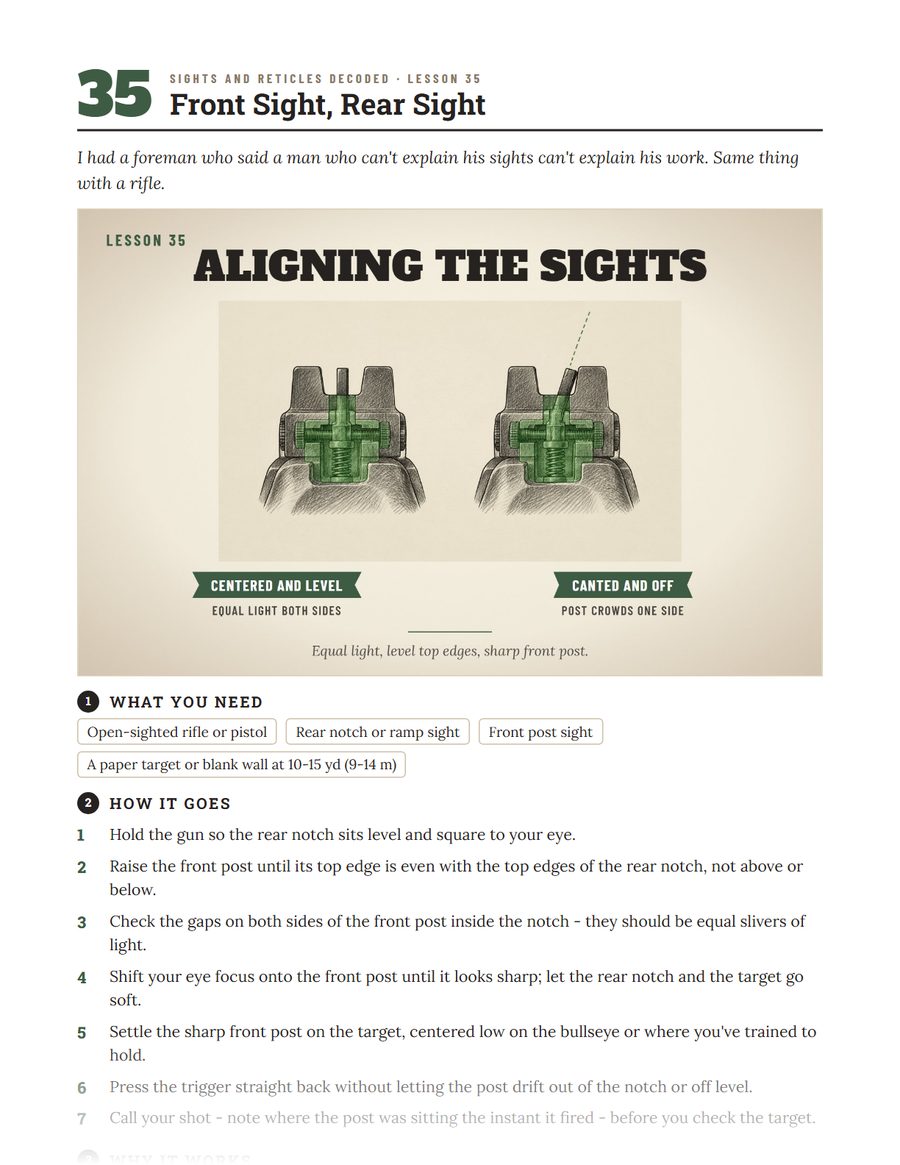
  1. 35Front Sight, Rear Sight
  2. 36The Peep Sight Advantage
  3. 37Zeroing, Explained Plainly
  4. 38MOA Versus MRAD
  5. 39Why Parallax Matters
  6. 40The Bullet Drop Compensator
  7. 41Red Dot Versus Holographic
  8. 42Iron Sights Under A Scope
  9. 43The Rule Of Eye Relief
  10. 44Why Scopes Fog Up
  11. 45Windage And Elevation Clicks

    Muzzle Devices And Strange Mechanisms

  1. 46What A Muzzle Brake Does
  2. 47Compensators Versus Brakes
  3. 48The Flash Hider's Real Job
  4. 49Suppressors, Honestly Explained
  5. 50Why Threads Strip Over Time
  6. 51The Gatling Gun's Crank Cycle
  7. 52Bullpup Layout Tradeoffs
  8. 53Roller-Delayed Blowback
  9. 54Revolving Rifles, Explained
  10. 55The Rolling Block Action
  11. 56Falling Block Mechanisms
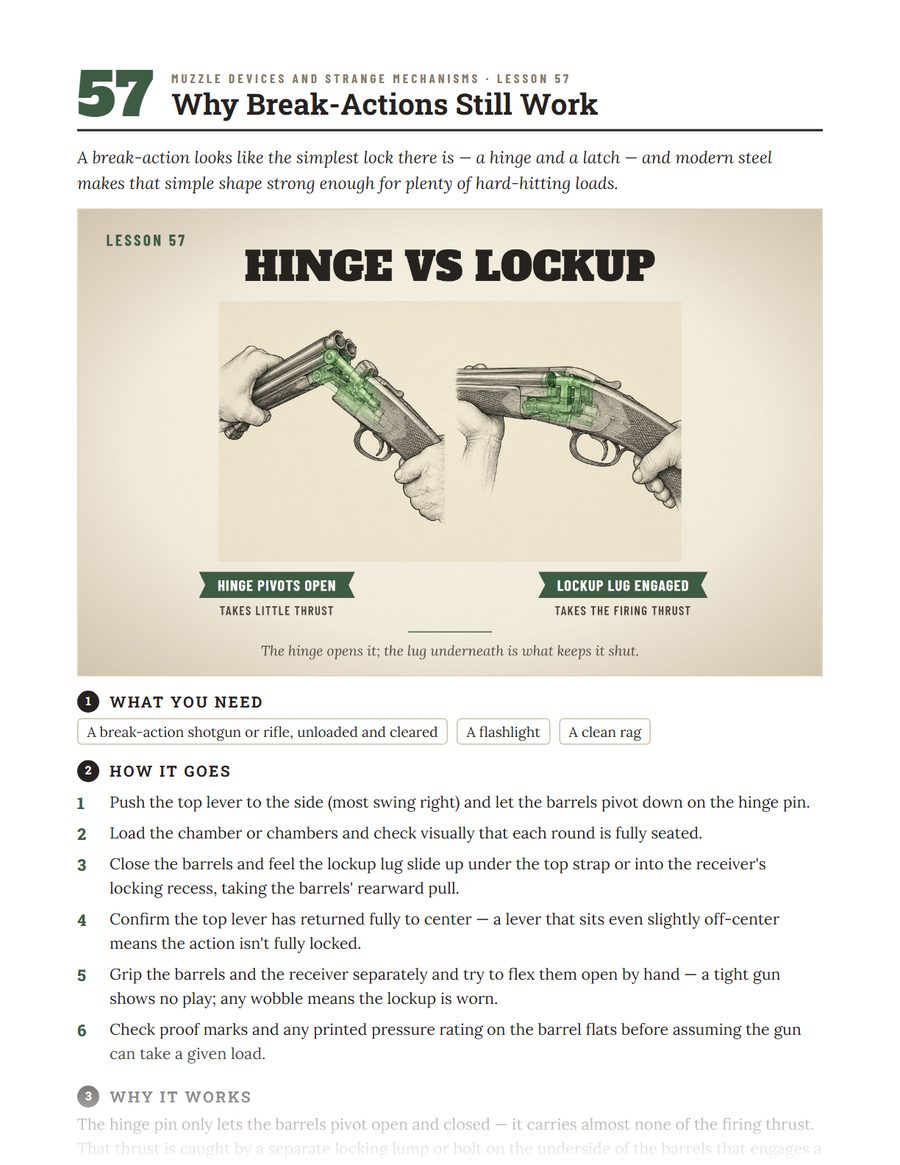
  12. 57Why Break-Actions Still Work

    Famous Guns And Myths, Honest Verdicts

  1. 58The AK's Loose-Fit Myth
  2. 59The AR's Dirty Gun Myth
  3. 60The 1911's Grip Safety
  4. 61The Glock Safety Myth
  5. 62The Mosin's Reputation, Checked
  6. 63The M14 Versus The M1
  7. 64Why The Luger Toggle Jams
  8. 65The Shotgun Spread Myth
  9. 66Does Barrel Length Really Matter
  10. 67Suppressor Versus Silencer
  11. 68Why Limp-Wristing Jams Guns
Straight answer

Who this book is for

It's for you if

  • You've watched the channel and want the explanations in one place instead of scattered across videos
  • You want to know why a bolt locks, not just that it does
  • You've argued in a comment section about gas versus recoil operation and want the actual answer
  • You own a gun and want to understand its action before you clean, shoot, or sell it
  • You like a mechanism explained in order, with a drawing, not a forum thread
  • You want a reference to flip to when something jams and you need to look up the symptom

It's not for you if

  • You want gun reviews, pricing, or buying advice — this is mechanisms only
  • You're looking for step-by-step gunsmithing repair work — this explains why, not how to fix a specific broken part
  • You want video — this is a PDF book, not a video course
Before you buy

Questions

What do I get?

The Gun Mechanism Notebook, one PDF covering all 68 lessons across six sections, with 68 drawings, 199 named mistakes, and a 210-entry symptom index in the back.

How do I get it after paying?

Gumroad handles the checkout and emails you the PDF and the one-page cheat sheet the moment you pay. Both also stay in your Gumroad library, so you can download them again any time.

Can I print it?

Yes. It's built to be read on a screen or printed and kept on the bench.

Is Gus a real person?

No. Gus Marchetti is an AI-generated character, and the page says so plainly. The mechanisms in the book are real, and every safety claim in it was checked against published sources.

Is the advice in here safe?

The mechanism explanations are meant to teach how a gun works, not to replace a qualified gunsmith's hands-on inspection. Several lessons include explicit safety checks — like confirming a revolver has a transfer bar before loading it full — but none of them stand in for proper training or professional service.

What if it isn't useful to me?

14-day money-back guarantee, no argument. If it's not useful, ask for the refund.

How do I pay?

Card, PayPal, Apple Pay or Google Pay through Gumroad's checkout, $32 for the book.

Sixty-eight mechanisms. One notebook.

No hype, no comment-section myths — just the actual reason a gun cycles, feeds, or fails, explained the way Walt taught Gus to explain a cut: measure it twice before you trust it.

By buying you agree to the Terms of Sale and Refund Policy.

0 checkouts started in the last 24 hours

$3268 lessons · PDF
Get the book